The Honest Guide toFull-Mouth Dental Implants
Everything You Should Know
Before You Spend a Dollar
Led by a Board-Certified Oral Surgeon
Dr. Tarik Elmohd, DMD
Oral & Maxillofacial Surgeon
with Dr. Arif, General Dentist
Two specialists. One roof.
A Quick Word Before You Begin
If you're reading this, something brought you here. Maybe loose teeth. Maybe a denture you can't stand wearing anymore. Maybe a partner who keeps telling you to "just go talk to someone." Whatever it is — we're glad you're here, and we're going to be straight with you.
Most implant ads online give you 10% of the story and ask you to come in for the other 90%. This guide does the opposite. You'll get the real numbers, the real timelines, the real questions to ask, and the honest trade-offs — so that whether you choose us or not, you walk into your consultation knowing more than 95% of patients ever do.
The Real Cost of Full-Mouth Implants
Let's get the question everyone is afraid to ask out of the way first.
Across the U.S., full-arch dental implants (All-on-4 / All-on-X) typically run between $20,000 and $30,000+ per arch. Some large corporate centers in Florida advertise prices in the high $20,000s once everything is added in. National pricing ranges from roughly $14,000 to $36,000 per arch depending on materials and what's included.
Why such a huge spread?
- How many implants are placed (4, 5, 6, or more)
- Whether sedation is included
- Whether extractions are included
- Whether limited bone grafting is included
- Temporary teeth, final teeth, or both
- What material the final teeth are made from
- Whether a warranty is included
- Who is performing the surgery
Bespoke Dental's All-Inclusive Price
We charge $15,999 per arch — and we mean all-inclusive. That includes the surgery by a board-certified oral surgeon, IV sedation, extractions of failing teeth, limited bone grafting if needed, your temporary teeth on day one, your final fixed bridge, and a full implant warranty. No surprise add-ons.
all-inclusive
per arch
That's potentially $12,000–$14,000 in savings — without cutting corners on the surgeon, the sedation, or the materials.
How People Actually Pay For This
Here's the truth almost nobody puts in an ad: most patients who get full-mouth implants don't write a single check. They use a combination of options.
Insurance
Most dental insurance won't fully cover implants, but many plans contribute toward extractions, sedation, or part of the restoration. Sometimes insurance covers $1,000–$3,000 you didn't expect.
Healthcare Financing — The Most Common Path
CareCredit, Cherry, Sunbit, Proceed Finance, and LendingClub specialize in dental financing.
- 0% interest promo periods (often 12–18 months)
- Long-term plans stretched over 5–10 years
- Soft credit checks that don't damage your score
- Same-day approval decisions
At Bespoke Dental, we offer 0% 12-month financing for qualifying patients, plus longer-term options that bring monthly payments into the few-hundred-dollars range.
Can a Family Member or Friend Co-Sign?
Yes — and this is one of the most overlooked paths. If you're not approved on your own (because of credit history, income, or being retired on a fixed income), many dental financing companies allow a co-signer or co-borrower. That can be a spouse, an adult child, a sibling, or a trusted friend with stronger credit.
Other Options Patients Use
- HSA / FSA accounts (implants are a qualified medical expense)
- Phasing treatment — one arch now, the other later
- Personal loans from a credit union
- Home equity lines, for those who own their home
What All-on-4 Actually Is (and Isn't)
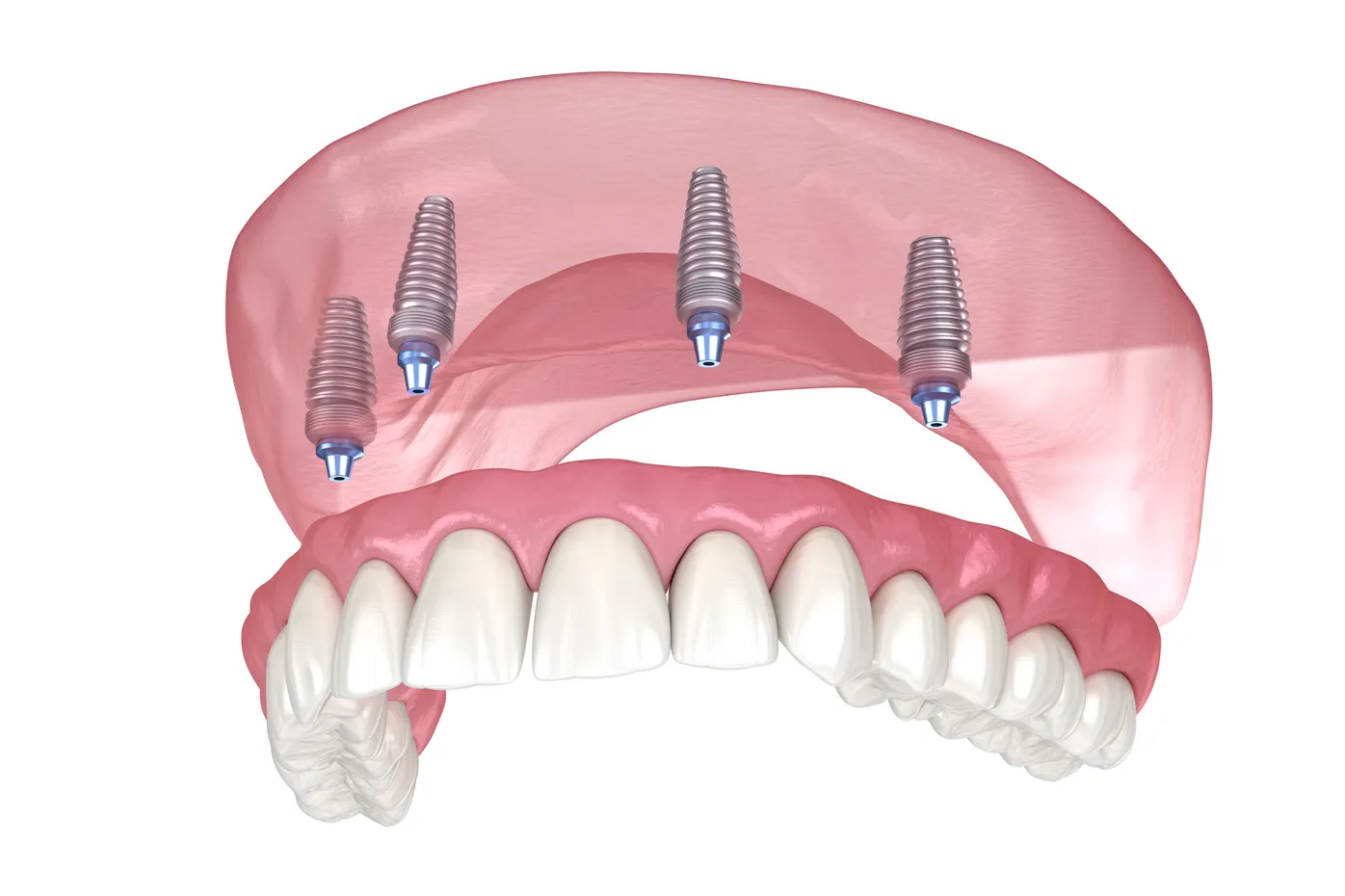
All-on-4 is a technique where a full arch of fixed teeth is supported by as few as four strategically placed implants. In some cases the surgeon places 5 or 6 — that's where "All-on-X" comes from. It's fixed, meaning it doesn't come out, and you clean around it like natural teeth.
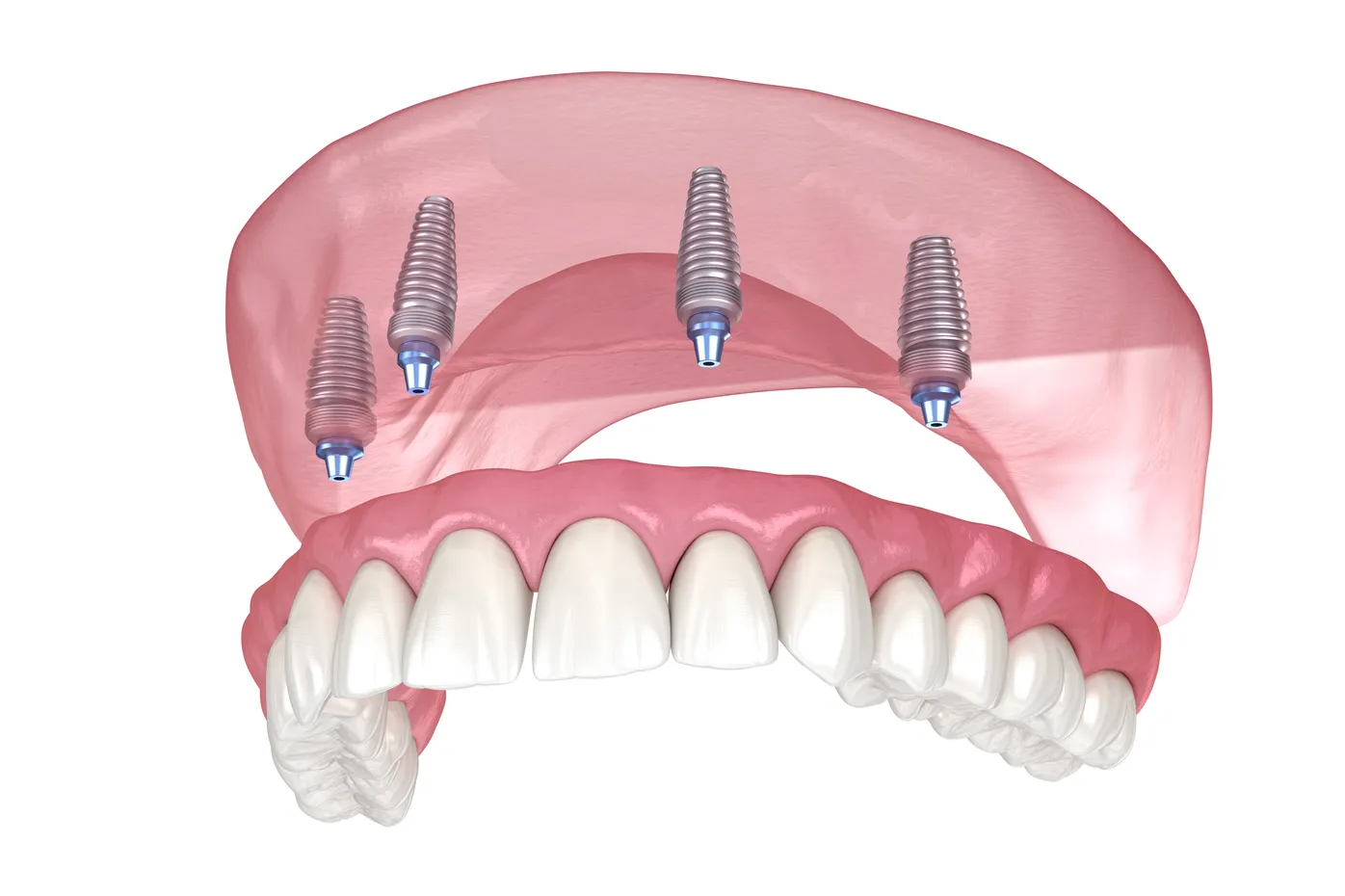
Compared to dentures, it's night and day
- No slipping, no clicking, no adhesive
- You can bite into an apple, chew steak, eat corn on the cob
- It preserves jawbone (dentures actually accelerate bone loss)
- Speech sounds normal again
- It looks like real teeth, because it's anchored like real teeth
The Myth of "Teeth in One Day"
You'll see this phrase everywhere. It's true — sort of. Many patients do walk out the same day with a fixed set of teeth. But what most ads won't tell you: that first set is almost always a temporary bridge, not your final teeth.
The temporary lets you function and smile while your implants heal and fuse to the bone — a process called osseointegration that takes 3–6 months. After healing, you come back for your final, custom-designed bridge.
The "Small, Medium, Large" Problem
Some high-volume implant chains have built their business on speed by standardizing the teeth they put in your mouth — a small handful of pre-set tooth shapes that get fitted to whoever walks in. It's fast. It's profitable. It's also why some patients end up with a smile that technically works but doesn't look like them.
Your face, lip line, bite, and jaw don't come in three sizes. At Bespoke Dental, every full-arch case is digitally planned around your specific anatomy. That's literally where the name "Bespoke" comes from.
How to Avoid the Wrong Treatment
The biggest financial risk in implant dentistry isn't paying too much. It's paying anything at all for a plan that wasn't right for your mouth.
Red Flag #1 — A quote before a CT scan
Implants are placed inside bone. Without a 3D cone-beam CT scan, no one — not even the best surgeon in the world — can tell you exactly what your case needs. If you're given a firm price before imaging, you're being sold to.
Red Flag #2 — Pressure to decide today
"This price is only good if you sign now" is a sales tactic, not a clinical recommendation. A real treatment plan is good next week, next month, and next quarter.
Red Flag #3 — One treatment for everyone
If every patient walks out with the same plan, that's an assembly line, not personalized care. Some patients need 4 implants, some need 6, some have salvageable teeth that should be saved.
Red Flag #4 — Vague material answers
Ask: "What material are my final teeth made of?" If the answer is fuzzy, dig deeper. Acrylic (PMMA) is fine for a temporary or budget-conscious final, but it wears faster. Zirconia is more durable, more stain-resistant, and looks more like natural enamel — but it costs more. You should know which one your price includes.
Red Flag #5 — You never meet the surgeon
In some chains, you meet a treatment coordinator, sign the paperwork, and don't meet the person actually doing your surgery until the day of. That's not how complex surgery should work.
Why Surgical Training Matters More Than You Think
Here's something most dental ads gloss over: the person placing your implants doesn't have to be a specialist. In most states, any licensed general dentist can take a weekend course and start placing implants the following Monday. That's legal. Whether it's wise is a different question.
Full-arch implant surgery is not just "placing four screws." It involves:
- Removing failing teeth without damaging surrounding bone
- Managing the sinuses in the upper jaw
- Avoiding the inferior alveolar nerve in the lower jaw
- Grafting bone where it's thin or missing
- Angling implants precisely so the bridge fits and bite works
- Managing IV sedation safely
- Handling complications calmly if anything unexpected happens
Each of those bullet points is a skill an oral and maxillofacial surgeon spends 4–6 years of hospital-based residency training on, after dental school. The American College of Prosthodontists and the American Association of Oral and Maxillofacial Surgeons both note that complex implant cases — especially full-arch reconstructions and patients with bone loss — benefit from specialist involvement.
The good news: you don't have to choose between specialist surgery and an experienced restorative dentist. The best outcomes happen when both are working on your case together — the surgeon plans and places, the restorative dentist designs the final smile and bite.
Meet Dr. Tarik Elmohd
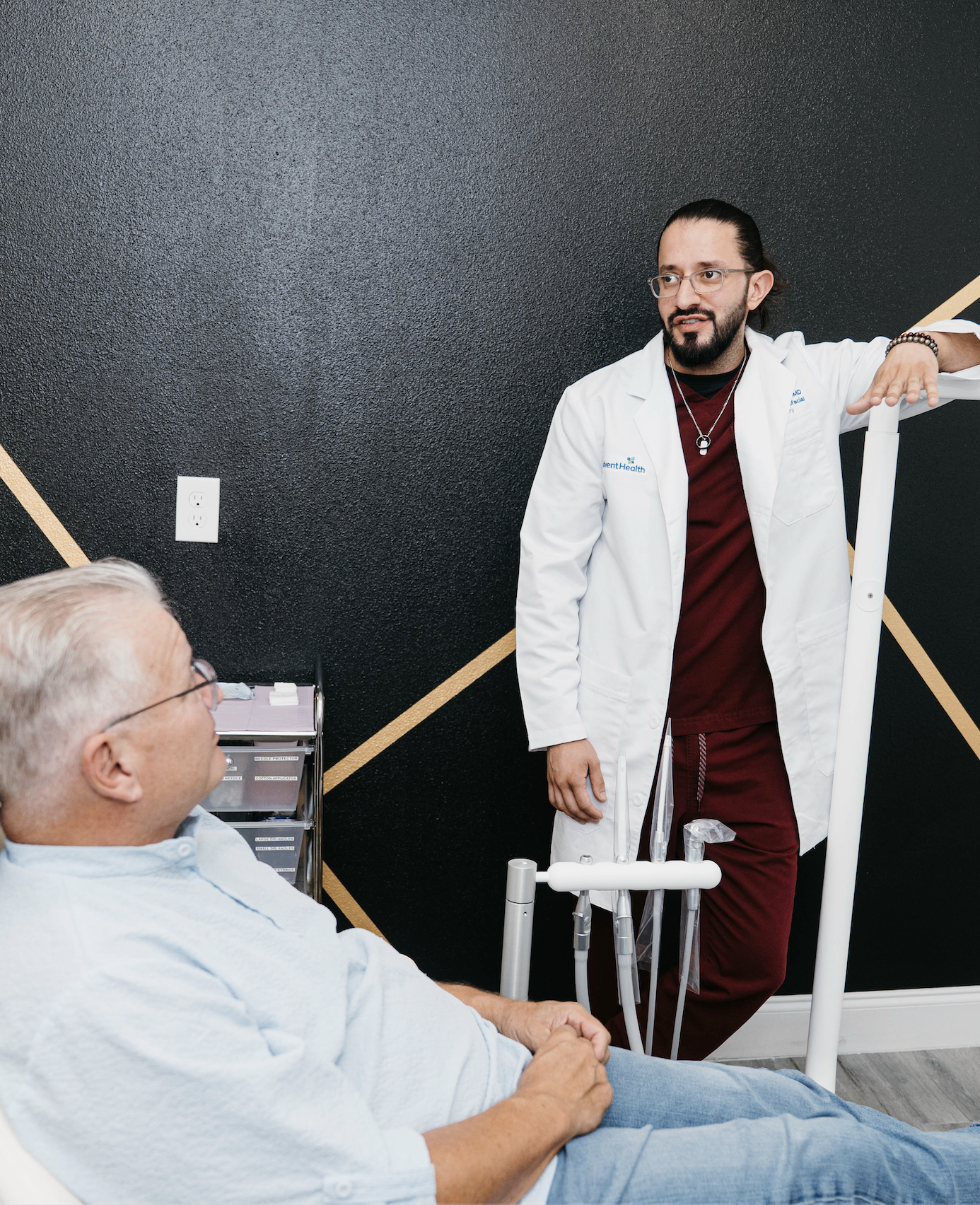
Dr. Tarik Elmohd, DMD
Board-Certified Oral & Maxillofacial Surgeon
Dr. Elmohd is the surgical lead at Bespoke Dental. He's a board-certified oral and maxillofacial surgeon who completed hospital-based residency training in advanced implant surgery, bone reconstruction, and facial trauma.
He's a Summa Cum Laude graduate of the University of South Florida and earned his dental degree from the University of Pennsylvania School of Dental Medicine — one of the top dental schools in the country.
When you sit in the chair at Bespoke Dental, the person placing your implants has the highest level of surgical training available in dentistry. He routinely takes on complex full-arch cases, severe bone loss cases (including zygomatic implants for patients told elsewhere they weren't candidates), and patients with medical complexity that other offices won't touch.
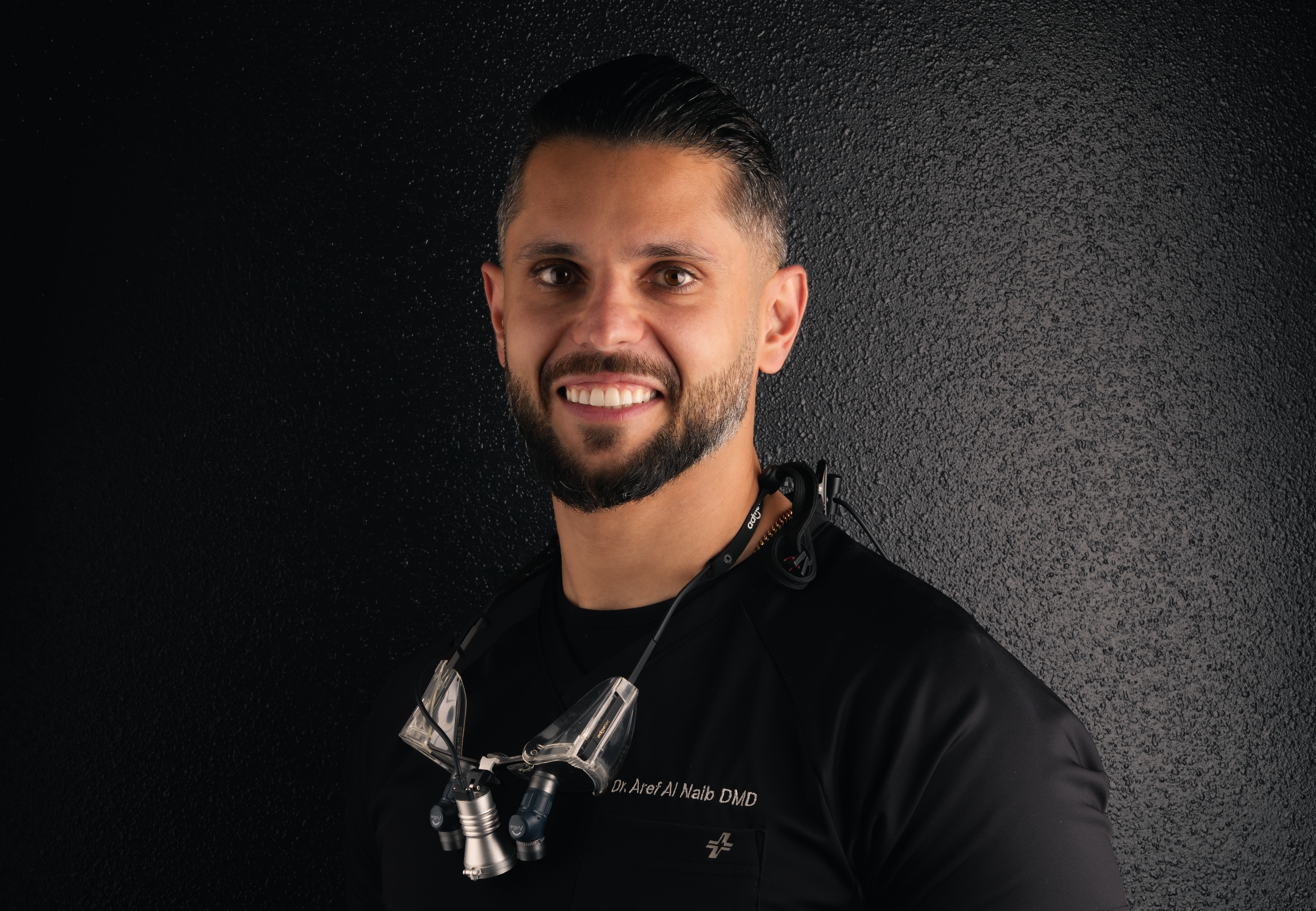
Meet Dr. Arif
Dr. Arif
General Dentist & Restorative Lead
Dr. Arif is the restorative side of the team. While Dr. Elmohd handles the surgery and the foundation, Dr. Arif designs how your final smile looks, how your bite functions, and how every tooth lines up with your face. He works closely with our digital lab partners to make sure the final bridge isn't just strong — it's beautiful, balanced, and unmistakably yours.
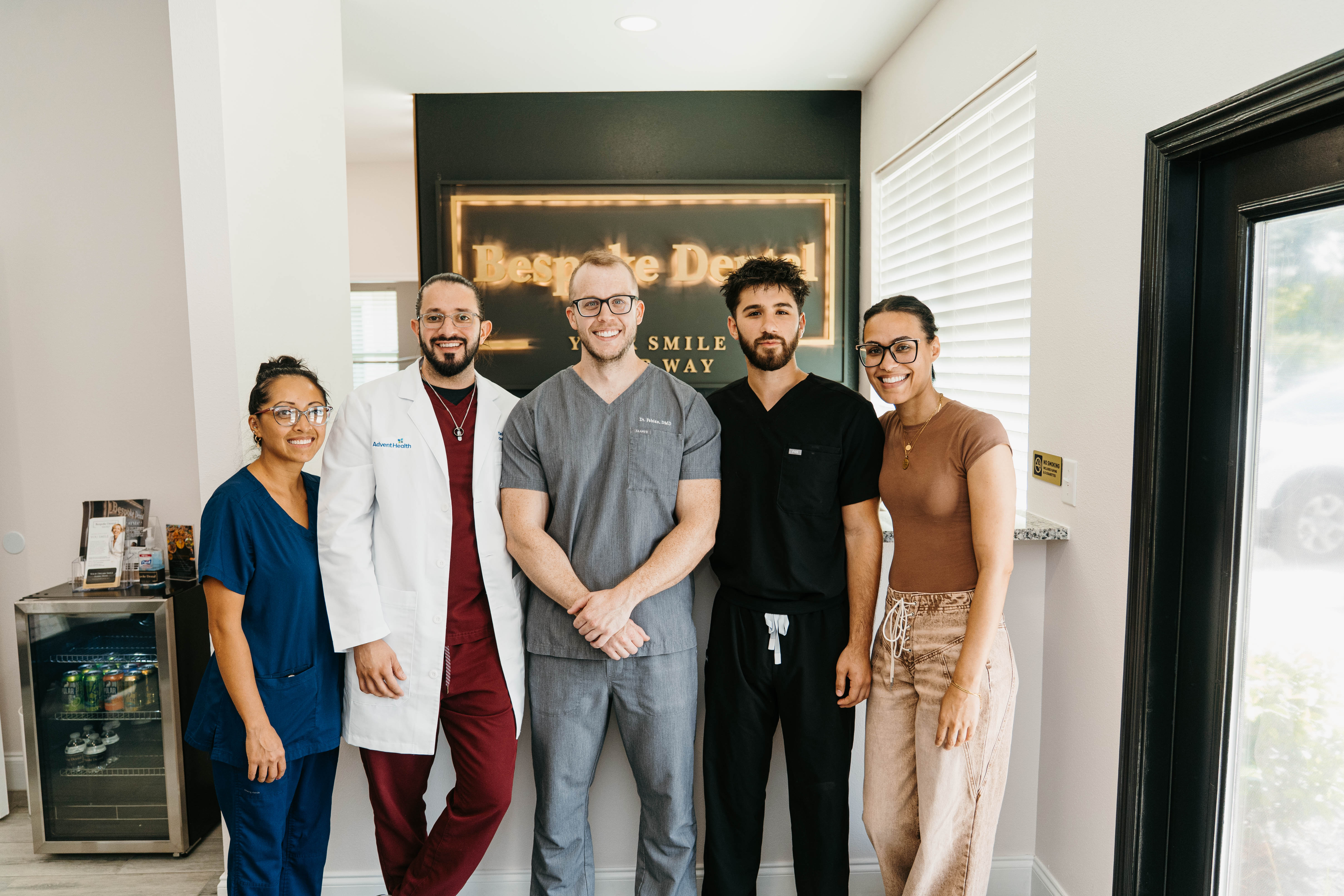
Two specialists, one roof
Together, they're a two-specialist team in the same building. You don't get bounced between offices. You don't get a coordinator playing telephone between two doctors who've never met. Your surgeon and your restorative dentist are looking at the same scans, planning your case together.
Real Patients. Real Results.
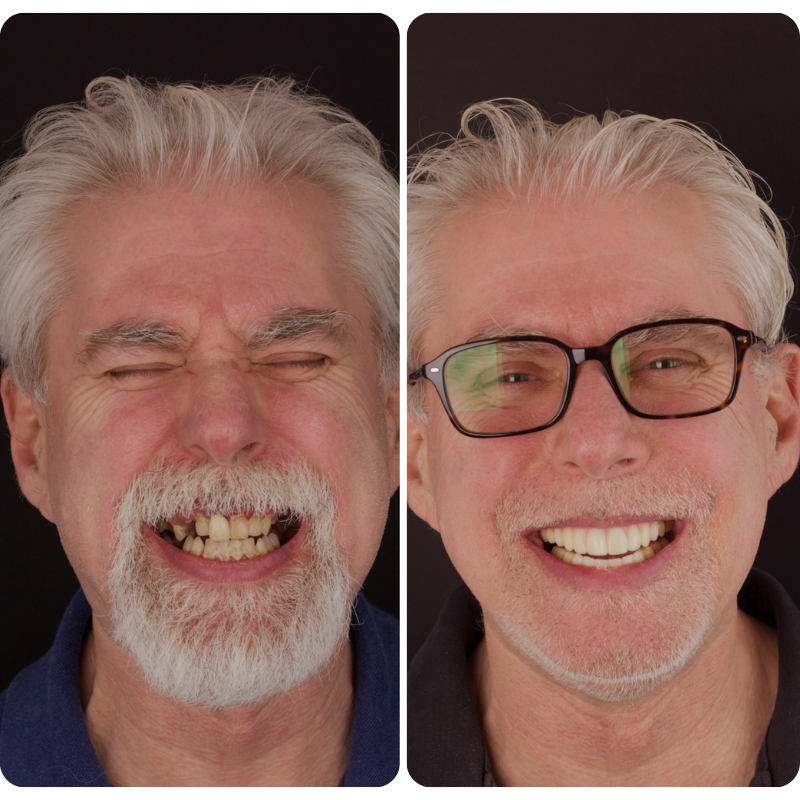
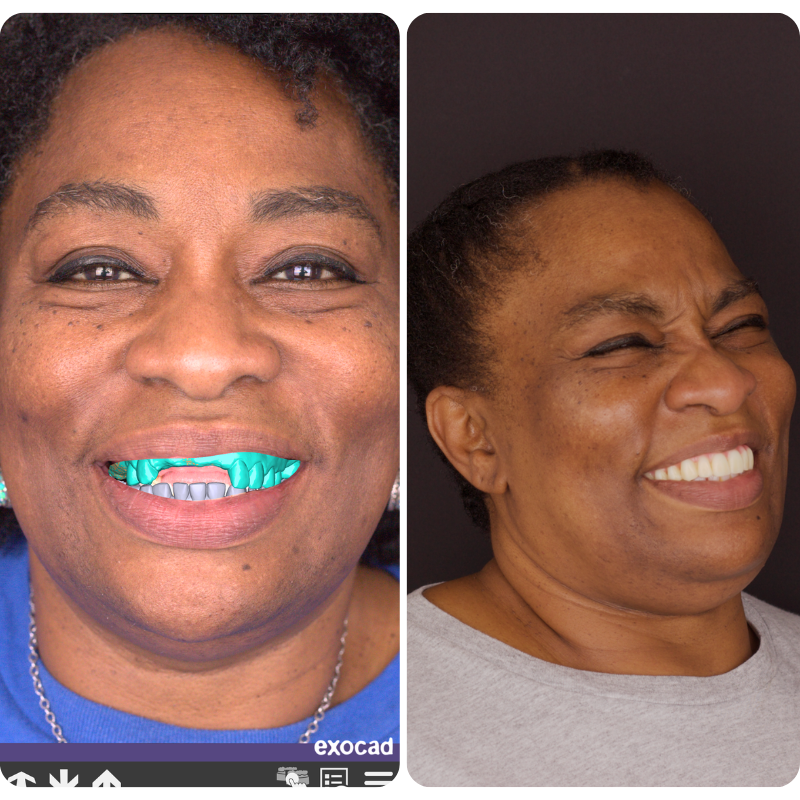
These are actual patients treated by Dr. Elmohd at Bespoke Dental. Every smile below was custom-designed and restored by our two-specialist team, start to finish.
Treatments We Offer
Whether you're missing a few teeth, struggling with dentures, or facing full-arch reconstruction, Dr. Elmohd is trained to handle the full range — including the complex cases other offices won't touch.
All-on-4 Full Arch
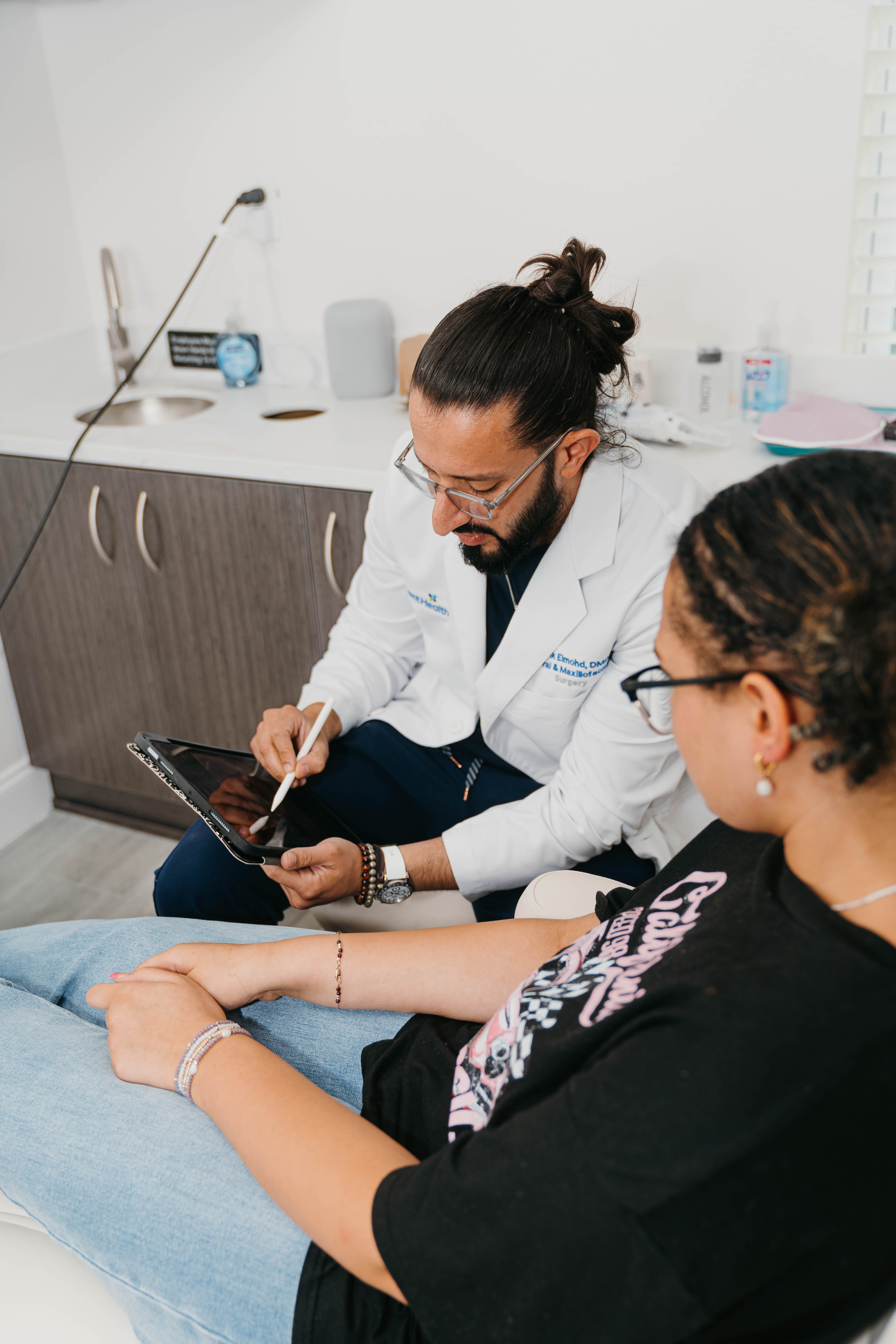
A full arch of fixed, beautiful teeth supported by 4–6 strategically placed implants — $15,999 all-inclusive. Includes FREE IV sedation, FREE extractions, FREE limited bone grafting if needed, full warranty, and 0% 12-month financing for qualifying patients.
Zygomatic Implants
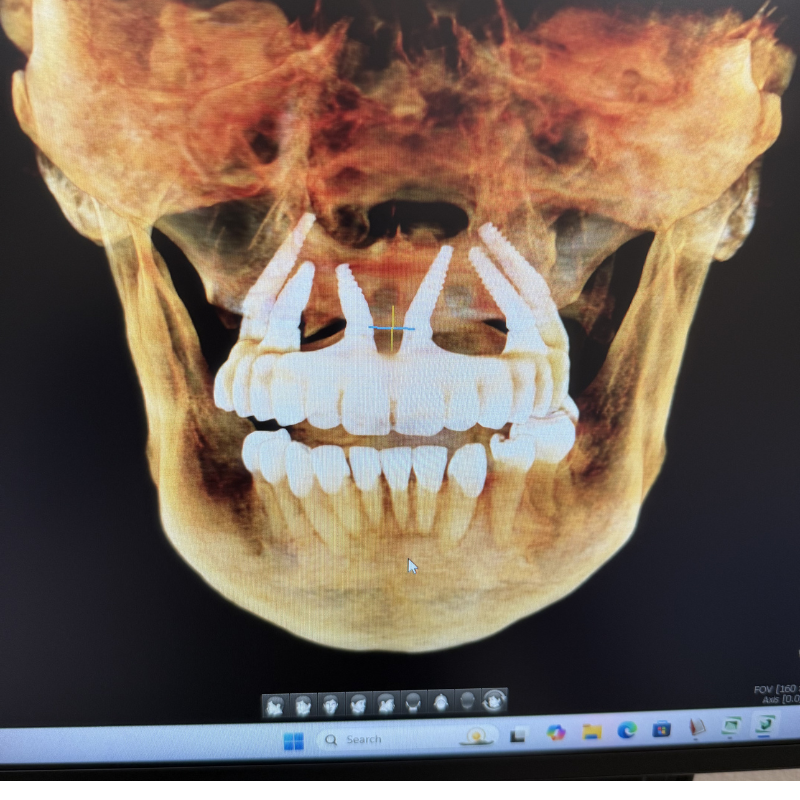
For patients with severe upper-jaw bone loss who've been told elsewhere they aren't candidates for implants. Zygomatic implants anchor into the cheekbone (zygoma) — a complex procedure that only an oral & maxillofacial surgeon is fully trained to perform. Dr. Elmohd routinely takes on zygomatic cases other offices turn away.
The Smart Patient's Checklist
Bring this list to any consultation — including ours. The answers will tell you almost everything you need to know.
- Is the price you quoted me all-inclusive?
- Does it include sedation, extractions, and grafting?
- Are the teeth I get on day one temporary or final?
- What material are my final teeth made of?
- Who is placing my implants — and what is their training?
- Will I have a 3D CT scan as part of my consultation?
- Is my treatment plan customized to my anatomy?
- What's the warranty, and what does it cover?
- Can a co-signer be added to financing?
- What happens if I need additional procedures mid-treatment?
- Can I meet the surgeon before my surgery day?
- How long is the full process from day one to final teeth?
The Next Step
If you've made it this far, you're not a casual shopper. You're someone seriously thinking about reclaiming the way you eat, smile, and feel about yourself. We respect that — and we'd be honored to help you figure out the right path, whether or not it ends with us.
Your free consultation includes:
- Face-to-face meeting with Dr. Elmohd, our board-certified oral surgeon
- A 3D cone-beam CT scan ($250–$500 value)
- Honest evaluation of whether All-on-4 fits you
- A clear treatment timeline
- An exact, all-inclusive price for your case
- A walkthrough of every financing option
- Zero pressure to decide that day
Swipe to Read
Swipe left and right to move between pages, or tap the arrows on the sides.
On desktop: use ← → arrow keys